South Dodge, A Vacated Ford County Town

In a previous post, I talked about the beginning of the South Dodge Town Company and the fraudster, Perry Wilden. It didn’t take long for “South Dodge” to mean anything south of the Arkansas River. Crawford’s Addition, for example, is just south of the river and it was said to be in South Dodge. Same with the new Rock Island Depot. In this installment, I’ll be sticking to the original South Dodge townsite and the newer Park Addition.

Things were already starting to get blurry by 1887 when South Dodge was attached to Dodge City for school and legal purposes.

Ford County Republican, March 23, 1887

As mentioned previously, D. F. and Ella Owens purchased the South Dodge townsite and began marketing the lots.

The Dodge City Times, April 21, 1887

And this is where the Owens and Beeson families did their little real estate switcheroo.

The Dodge City Times, May 5, 1887

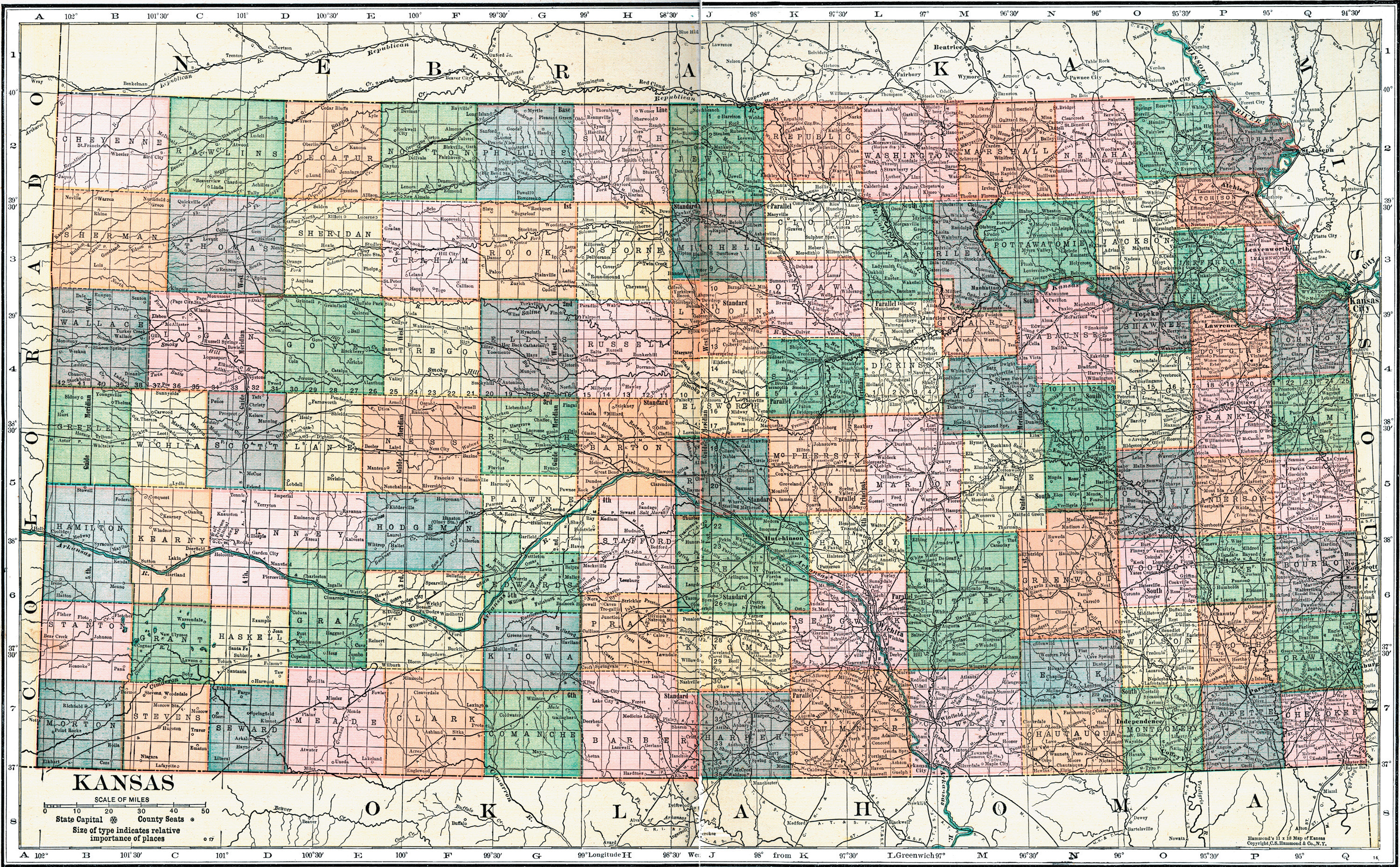
This 1887 map from the David Rumsey Map Collection shows the new Park Addition west of the original South Dodge site. The county road running east and west is now Beeson Road. You can click on the image to view the full map.

Chalk and Ida immediately petitioned to vacate the entire Park Addition. The home they purchased was located at the southeast corner of what is now Beeson Road and 14th Avenue and this would allow them to maintain the acreage as farmland.

Ford County Republican, June 8, 1887

There was a bit of a boom in South Dodge around this time but the newspapers reported people were waiting to build until the street railway was operational. It appears they were also waiting to pay their taxes.

Dodge City Weekly Democrat, July 16, 1887

By September of 1887, the street railway system hadn’t yet materialized but it hadn’t been forgotten.

The Daily Commonwealth (Topeka), September 7, 1887

This is the house the Owens family traded to my great-great grandparents. D. F. Owens was the Editor and Publisher of The Dodge City Times when these ads were running.

The Dodge City Times, November 24, 1887

Finally an explanation about the street railway company! It was doomed from the beginning.

In November of 1889, Chalk and Ida tried a second time to have the streets and alleyways of the Park Addition vacated. This petition was granted in January of 1890. A few months later, Ham Bell established a county poor house at the old Wilden farm.

Dodge City Democrat, April 12, 1890

The South Dodge Town Company still owned some lots in August of 1890.

The Dodge City Democrat, August 2, 1890

Although most town lots had been sold, there weren’t enough residents and businesses to meet the state requirements. The townsite of South Dodge was vacated by an Act of the Kansas Legislature in March of 1895.

The Advocate (Topeka, Kan.), March 27, 1895

Over time, Chalk bought up the parcels as property taxes became delinquent and lots went into foreclosure. Rather than being listed in South Dodge, they were considered part of Richland Township. This is how the map looked in 1905.

Standard Atlas of Ford County, Kansas, 1905-6

You can see that all of Section 2 was owned by Ida and Merritt Beeson by 1916.

Atlas and Plat Book of Ford County, Kansas, 1916

The 1932 Sanborn shows the southern city boundary was at Sycamore Street with a small part of Sunnyside included. Beeson Road was Highway 45 and it was in the county at that time.

You’ll also notice that Sunnyside no longer went diagonally to the southwest all the way to Beeson Road. By 1932, it had been reoriented to run straight south where the current curve is south of Market Street.

From a business standpoint, there wasn’t much to tell for many years because Merritt held onto the land after he inherited it from Ida. He gave a large chunk to Betty and she and Red had it subdivided.

The Chalk Beeson Addition was platted in 1947 but it was mostly residential. This addition was replatted several times to add streets and lots for commercial buildings.

Betty’s husband, Red Miller, had the Miller Subdivision No. 1 platted in 1965.

And then, after the great tragedy occurred, the north end of the old South Dodge townsite was replatted again.

The Ford County Subdivision map still says South Dodge but the designation has shifted to the northeast.

How does that translate to the current neighborhood? I marked the areas in red boxes on the Ford County GIS Map below. I may be off a bit on the dividing line between South Dodge and Park Addition but the outside boundaries are correct.

So if any of you remember before the South High Rise was built, the road from Merritt’s house went straight south across McArtor Road toward Red Miller’s house. That was the supply road that went south of town and THAT was Supply Avenue.

I remember hearing people talk about South Dodge becoming a separate municipality when I was a kid. Since the residents of South Dodge were treated like they weren’t part of Dodge City, they would just secede from the City and organize one of their own! Little did I know that we had already been there and done that.

If you like what you see, be sure to subscribe (way at the bottom of the post on mobile devices) to receive an email each time a new post is published and share on social media. You can also support my work by donating below. This content is 100% funded by history fanatics such as yourself. Thanks for reading!

Some of you have requested additional donation options. If you would like to send a direct donation, you can now do so by clicking here.

Donation

Your support keeps the content flowing! Make a one-time donation. Your contribution is appreciated!

$5.00

Ida Beeson Building Then and Now

217 West Chestnut and 216 Front Street

Don’t worry…I’m not making this about the Long Branch! There’s no way I can do better than everyone else who has already written about the famous saloon. It gets a little confusing because there were multiple “Beeson Buildings” in Dodge and two of them were long, skinny buildings with storefronts on Chestnut and Front Streets. This post is about the Ida Beeson Building between First and Second Avenues.

The 1884 Sanborn Fire Insurance Map is the earliest available and it, of course, shows a long and narrow saloon at what was then 214 Front Street. There was a small building in the back at 323 Chestnut Street.

You probably already know the Long Branch burned in December of 1885. Chalk Beeson and his partner, William Harris, had gotten out of the saloon business but Chalk retained ownership of the building.

The Globe Live Stock Journal, December 15, 1885

The property owners got busy rebuilding right away. Weston and Trost were the architects and the group of buildings was called the Union Block.

The Dodge City Democrat, May 22, 1886

Isa S Richards occupied the upstairs offices on the Chestnut Street side in August of 1886.

The Globe Live Stock Journal, August 31, 1886

The United States Signal Service also moved in to the upstairs rooms along Front Street that August and G. T. Inge’s store occupied the main room on the Chestnut side.

The Dodge City Democrat, September 11, 1886

By February of 1887, the storefront on the Chestnut side was vacant and plans were in place to remodel the space for a new bank. Meanwhile, Boyer and Hobble moved their insurance and real estate office to the north basement room but they only stayed a few months.

The American State Bank of Dodge City was formed on March 25, 1887. You’re not going to believe this but the charter and articles of incorporation survived.

I love how the paper claimed Dodge had “three good and reliable banks.” I beg to differ!

The Dodge City Democrat, April 2, 1887

The Dodge City Times, April 7, 1887

The 1887 Sanborn map shows offices at 403 Front Street and the bank at 319 Chestnut Street.

In April of 1887, Wicks and Harrison moved their law office into the basement rooms on the Front Street side and were joined by realtor J. P. Erwin. Sherwood and Dickinson were offering farm loans from the main floor rooms on Front Street.

The Globe Live Stock Journal, May 17, 1887

Isa Richards moved his office in January of 1888 and the spot was occupied by County Attorney, W. E. Hendricks. Physicians Wright and Plumer also had offices in the building at that time.

In May of 1888, T. C. Owen moved his Star Barber Shop into the basement room on Front Street.

The Dodge City Times, March 28, 1889

I should note that this building was initially referred to as Chalk’s building but the property was listed in Ida’s name by August of 1888.

Many of you have seen this photo before. It seems like the date is usually given as 1890 but I believe it was taken a bit earlier.

Photographer Unknown

The American State Bank stopped being a thing in September of 1889 and the fixtures were shipped to Ingalls in January of 1890.

Western Kansas Ensign, September 20, 1889

J. S. Carson’s tailoring shop moved into a room on the Front Street side in February of 1890. He had recently moved to Dodge from Pueblo. Harry Newfer also moved a grocery into the bank’s old spot that month. Newfer, however, sold the grocery to J. M. Bell two months later.

Dodge City Democrat, April 5, 1890

The Globe-Republican, January 21, 1892

R. W. Evans bought out J. M. Bell in September of 1894 and continued at the “old stand” until he moved the store to the Wright Building in March of 1895. Mrs. M. M. Wolff and Ella Steinman moved their millinery store in the former grocery the following month.

The Globe-Republican, March 29, 1895

Wolff and Steinman moved their store to Arkansas City in March of 1897 and M. M. Gwinner moved his City (not Star) Bakery into the spot.

The Globe-Republican, March 11, 1897

In February of 1901, Gwinner sold City Bakery to Roy W Burnett.

The Globe-Republican, February 14, 1901

Gwinner then changed his mind and bought it back in August of 1901. Dentist R. W. Hellwarth established his office over the bakery in October of 1901.

The Globe-Republican, November 8, 1901

It appears the cakes and candies business was not all fun and games, though.

The Live Stock Farmer, January 5, 1904

Brothers W. A. and Ernest Sturgeon bought Gwinner’s City Bakery in November of 1906 for $8,000.

The Globe-Republican, November 22, 1906

Pioneer Barber Shop began in the 1890s. By 1909, it was owned by Will Lowman, who was married to Grace Sturgeon. This ad shows the block had been renumbered between 1905 and 1909.

The Daily Clarion, May 20, 1909

Lowman sold the shop to Charles McKenzie, who then sold it to Frank Cox in November of 1911.

The Dodge City Kansas Journal, December 1, 1911

The 1911 Sanborn shows both the old and new street numbers.

Judge B. F. Milton set up his office above Sturgeon’s in September of 1913.

The Dodge City Globe, September 18, 1913

After Chalk died, Ida moved into rooms on the second floor of the Front Street side. I’m sure she was thrilled to learn about the papered-over flue hole.

Dodge City Daily Globe, December 10, 1915

Although Ida sold the building in March of 1918, she continued living on the second floor until October of 1918.

Dodge City Daily Globe, March 30, 1917

The 1918 Sanborn shows Sturgeon’s had expanded to take up the entire first floor of the buiding.

Taylor-Sturgeon Tire Company was located at 216 Front (in the basement, I believe) from about June to November of 1920.

The Dodge City Journal, November 25, 1920

As I mentioned here, the Sturgeon family decided to focus on the Fourth Avenue bakery and closed the Chestnut location at the end of 1920. The former bakery underwent an extensive remodel and Dr. Milton D Reynolds moved his jewelry store into the spot in January of 1921.

The Dodge City Journal, January 20, 1921

Harry Grose bought the Sturgeon’s Confectionery fixtures and equipment. His wife was Minnie Sturgeon and they moved everything into the space at 216 Front Street.

The Dodge City Journal, January 20, 1921

Dr. Ernest C Main opened his chiropractic office above Reynolds Jewelry in June of 1924.

The Dodger, November 25, 1924

W. P. Childress had the American Barber Shop at 216 Front Street in August of 1924.

The Southwest News, August 21, 1924

Two months later, it was the Shorty Grubbs Barber Shop.

The Southwest News, October 23, 1924

From approximately 1926 to 1928, 216 Front Street was home to the Gents Barber Shop.

I’m not sure exactly when the ornate Victorian details were removed but they were still present in this photo from around 1930.

Photographer Unknown

The 1932 Sanborn shows the dividing wall on the first floor was once again in place.

Sometime between 1937 and 1947, Reynolds Jewelry Co. became Morgan Jewelry. The barber shop became Sunflower Barber Shop.

By 1953, Arvin Heichen Jewelers was on the Chestnut side and that was the last store to occupy the space.

Dodge City Daily Globe Kansas Centennial Edition, July 1961

The Jack Harned Barber Shop occupied the Front Street side until Schafer’s Cafe took the spot in 1960.

Polk’s Dodge City (Ford County, Kansas) Directory 1960

Schafer’s moved and was replaced by El Poche Cafe.

Dodge City Daily Globe Kansas Centennial Edition, July 1961

In this famous post card, it’s easy to see the El Poche Cafe sign two doors west of Bill’s Tavern. You can also see that the Victorian roofline had been completely erased from existence.

These photos, which were taken just prior to demolition, are just depressing. All of those insanely ornate buildings became sad and shabby.

If you stand right here and look south, you’ll be staring over the former Ida Beeson lot.

It isn’t exactly inspiring but I guess a parking lot is better than a dilapidated wreck of what once was.

If you like what you see, be sure to subscribe (way at the bottom of the post on mobile devices) to receive an email each time a new post is published and share on social media. You can also buy me a cup of coffee using the donation form. Thanks for reading!

Donation

Your support keeps the content flowing! Make a one-time donation. Your contribution is appreciated!

$5.00

South Dodge Entertainment Then and Now

My grandmother loved to dance and roller skate. There wasn’t much going on in the area around the Beeson House while Irene was growing up but she could enjoy two of her favorite activities right across the street.

“Jim McDowell opened a dance hall in a vacant garage (large) across the street from our house. 10 cents a dance with live bands, open Wednesday and Saturday nights. Some Saturdays, it would last ’til dawn…known as a Sunrise Dance. The parking lot would be covered with whiskey bottles. Some of the bottles were fancy. I met my first girl friend there. Girls came with their parents. One eve a good-looking young man asked me to dance but I was too shy. Wished later I had.”

Irene Beeson

Jim McDowell was the former Ford County Weed Supervisor who died in 1980. In 1930, he rented a room from my great-grandparents at the Beeson House. Jim’s occupation was listed on the 1930 Federal Census as manager of a public dance hall, working on his own account.

The vacant garage in question was Percy Orval Riley’s Sunnyside Garage, which may have previously occupied a location on South Second Avenue but I’m not completely sure about that. Irene’s best friend while she was in grade school was Florene Riley, who was Percy’s much-younger sister. Incidentally, Florene married Cecil Metcalf and was Barry’s mother, for those of you who are Dodge locals.

The Southwest News, October 29, 1925
The Southwest News, November 5, 1925

The first Sanborn Fire Insurance Map to include the northeast corner of what is now Beeson Road and Sunnyside Avenue was published in 1932. It’s a black and white PDF so I’ve included screenshots of Pages 1 and17 here.

This image from Page 17 is great until you start wondering what the heck Highway 45 was.

The map below kind of made me think it was actually showing McArtor Road (formerly Hwy 56) but it’s definitely what is now Beeson Road. All you have to do is look on a current map at where the railroad tracks cross 14th Street and it’s obvious. Plus, the 1930 Federal Census lists the Beeson House on “Township Highway.” Now we’ve all learned something.

In 1928, Riley Garage was listed on “Beeson Highway” but it moved to a new spot at 613 Sunnyside Avenue, which is where Poor Boy Kustomz is currently located. That building was dark green with white doors for many years, if I remember correctly. Percy and his wife, Alice, lived next door at 615 Sunnyside. The house which occupied that lot has been gone for several decades. His mother, Flora, lived on the other side of the building at 611 Sunnyside. Cecil and Florene (Riley) Metcalf lived a few houses south at 707 Sunnyside. At one point, the Riley family owned all of those lots.

Anyway, the dance hall became a roller skating rink while Irene was in high school (Class of 1940.) I’m not sure if it was ever opened as a public rink or if Irene and her friends just found a way inside and skated on the maple floor. I do remember her saying holes in the roof eventually allowed rain to ruin the floor and their fun. Here she is posing out front along Sunnyside and facing south.

Photographer Unknown

In the background, you can see the porch roof of the house that is still located at 708 Sunnyside Avenue. When I was a kid, I skated at the rink up on the bypass and it had concrete floors so I was amazed when she told me she skated on wood floors. It seemed so sketchy to me for some reason.

There was no business listing there by 1947 and it seems like it was torn down in the 1950s. The lot was really junky for a long time and then someone came in and cleaned it up maybe in the late 1980s or early ’90s. The satellite view on Google Maps still shows a clear outline of the foundation.

Here are a few photos I took recently:

Speaking of skates, I rolled around on these white ones throughout my childhood. Then I carried them around with me from state to state for decades until finally surrendering them to my cousin in their original box. Roller skates are serious business.

Photographer Unknown

Here’s some bonus content. I labeled this photo “skating rink” while Irene was still alive but I was studying the sign a couple days ago and thought I must have been mistaken. It looks like it’s a cafe so why would I think it was a skating rink? Well, if you look between the “CA” and “FOUNTAIN,” you will notice “PUNCH BROWN” in faded letters.

(L to R): Mary Jane Heft, Eleanor Sage, Irene Beeson – Photographer Unknown

That seems kind of weird unless you know that Punch Brown ran a skating rink! He had been undersheriff of Finney County circa 1917 and then relocated to Dodge City. In 1925, he opened a skating rink in the Merchants Pavilion on the west side of Second Avenue at Water Street.

The Southwest News, October 22, 1925

Not to be confused with the Hoover Pavilion, which was built in 1919, the Merchants Pavilion was constructed by the City of Dodge City in 1925 initially to house exhibitors’ booths at the Great Southwest Fair. When Punch Brown converted the building to a skating rink, he also added a separate dance floor. The idea was for the building to be used for dancing and skating during the winter and then booths could be brought back in for the fair each year. The 1926 Sanborn Map shows both pavilions as well as the surrounding structures.

The facility ended up hosting all sorts of events.

The Southwest News, March 25, 1926
The Hutchinson News, May 28, 1927

The City decided to sell the pavilion in 1929 to fund improvements at Wright Park and the fairgrounds. It’s unclear how exactly that transpired but Allis-Chalmers Manufacturing Co. was located there in 1937. Mayrath Machinery Company was in this building in 1945.

Dodge City Daily Globe, October 20, 1945

I think Mayrath may have been there a touch earlier because Dodge flooded in 1942 and the Minneapolis Moline sign can be seen in this photo. Someone else will have to decide if that year jives with the cars. That is not my department!

Photo by Red Miller

The building appears to have been vacant by at least 1947. By 1957, the building was home to Nufer-Stremel Used Cars. Now this is how you sell cars!

Great Bend Daily Tribune, August 5, 1958

That business morphed into Nufer-Hutton Used Cars by 1961. I can’t remember ever seeing a building in that spot. It makes me wonder if it was a victim of the 1965 flood.

The Google Maps satellite view makes it easy to see where the building was situated just south of Overhead Door.

Unfortunately, I didn’t grab any photos of this location while I was in Dodge this last time because I had no idea where this post would take me. If anyone knows for sure how the Merchants Pavilion story ended, please leave a comment!

If you like what you see, be sure to subscribe (way at the bottom of the post on mobile devices) to receive an email each time a new post is published and share on social media. You can also buy me a cup of coffee using the donation form. Thanks for reading!

Donation

Your support keeps the content flowing! Make a one-time donation. Your contribution is appreciated!

$5.00

Beeson Station? Never Heard of It!

Do you ever wonder about those obscure dots on the maps that meteorologists point toward during their forecasts? You know, the dots on roads you’ve been using your entire life and you are absolutely certain that there is no “there” there? For Kansas people, Sears and Buttermilk are good examples. I really thought Merril Teller was crazy.

Ever since I received a 1936 world atlas as a gift, I’ve meant to look up the dot on the Kansas map that says, “Beeson.” Like you, I’d never heard of it. I would definitely remember if my grandmother had mentioned a train station named after the family!

The Popular Atlas of the World, 1936

It seemed like AT&SF archives would be a good place to start but that isn’t as easy as it sounds. I found a time table from 1873 that was for employee use only and there was nothing listed between Spearville and Dodge City at that time. This 1883 Santa Fe map is insanely cool but only lists Dodge, Wright, and Spearville. But here it is on this 1920 Kansas railroad map.

The announcement of its closing was the first mention I was able to find in the local newspapers.

The Globe-Republican, April 22, 1909

I had only a vague idea of where it was located and since the town boundaries have stretched dramatically over the years, learning it was six miles east of Dodge didn’t help much. Isn’t Wright considered six miles east of Dodge now? But it was still used as a landmark and I was able to use the legal description from this adjacent lot to narrow it down somewhat.

The Stafford County Republican, March 24, 1910

Terrific…let’s check out the maps.

Standard Atlas of Ford County Kansas, 1905-6

I zoomed in on those 11.36 acres, which helped, but still left five possibilities. But Lot 17 doesn’t make any sense on the old plat maps or the current parcel map.

So I looked at a later map that included irrigation ditches. It makes sense to have this near a jerkwater station but did it actually go under the tracks? I have no idea what the well situation was like out there.

Atlas and Plat Book of Ford County Kansas, 1916

This really doesn’t help. I went though the big book at the Ford County Register of Deeds office and found T. F. Garner had Lots 1 & 2 in Section 22. So the ad in the paper showing Lot 17 could have been the product of sloppy handwriting or lack of proofreading. In the current context, it wouldn’t make sense for Lots 1 & 2 to be near the middle of the section but if you scroll back up to the 1905 map, you’ll see the bottom row of lots was still part of the Fort Dodge Military Reservation.

But this article does help…maybe. Most winter storms come with a north wind and if the blocks ended up on the tracks, then I guess it had to be a parcel on the north side of the tracks.

The Dodge City Kansas Journal, January 6, 1911

So this article about a derailment at Beeson mentions a (water?) tower still in existence in 1911.

The Dodge City Globe, February 23, 1911

Here we have mention of a side track going north from Beeson up to the new ballast field.

Evening Kansan-Republican (Newton, Kansas), November 1, 1913

The current GIS survey map shows a side track going north to the Koch plant.

And the road referenced below is 116 Road.

The Dodge City Daily Globe, February 24, 1915

This article is confusing. Not because my idea of a drunken orgy is somewhat different from Mr. Mercado’s but because it seems like the station was again in use.

The Dodge City Journal, January 5, 1922

And that’s it…the last mention of the Beeson station. Having nothing else to go on, it was time to take a walk down the rails. So just understand, I like riding on trains but I know nothing about them. I used to ship plywood to Mexico, you guys. That’s the extent of my knowledge. But I’m pretty sure the rail bed has moved a bit over the past 100 years. So I just started walking and taking photos on both sides of the existing tracks to see if there were any markers or debris that looked interesting.

There were a couple spots directly behind the Koch plant that looked promising. Lots of broken up concrete, some blocks, a well, and wide spots along the rail siding that goes to Hi Plains Feed. One of my questions is whether the old AT&SF line was converted to private sidings once the old tracks were replaced. Anyone?

There has been so much construction in this area that I just don’t know what is old and what isn’t. But I did find this cool lock. And yes, I put it back exactly where I found it.

I was able to confirm the information I had found with the Kansas Heritage Center in Dodge. The Register of Deeds office was extremely helpful in my search. After looking through the giant book listing property transfers in Section 22, I was taken downstairs to the GIS/Survey Department. Ben and Jessica enjoy solving mysteries and Jessica found a railroad map from 1985 that still had Beeson listed between mile markers 347 and 348.

This map seems to confirm that T. F. Garner used the word “adjacent” a bit loosely in his 1910 auction advertisement. Ben took another look at the GIS map and pointed out these little notches along the tracks.

He said those notches had to come from work done by a woman named Theresa, who worked at the Ford County Appraiser’s Office for a million years. She made ridiculously detailed notes, especially whenever something interesting crossed her desk. Those notes often found themselves attached to files in the records closet. He suggested I go to the Appraiser’s Office and beg for access to those files. HA!

So I made my second hike of the day up the Lora-Locke stairs and am pretty sure those ladies thought I came from Mars. I left my contact information and do not expect to hear from them…like…ever. Not that I can blame them. But honestly, I would be happy to sit in the file room and look for myself. It’s not like this is top secret information.

Anyway, Ben also gave me contact information for a Survey Coordinator with the State of Kansas, who probably also decided I’m insane when my email landed in his inbox. I also emailed the Kansas Historical Society to see what they have in their collection that isn’t available online. They have so many AT&SF records but they aren’t necessarily named so that you have a good idea of their relevance. Finding aid? Pish posh!

Barring any additional evidence to the contrary, here’s where I think the Beeson station was located. We know the station was just west of mile marker 347.

If you compare the 1985 railroad map to the current GIS map, it appears to basically straddle the southwest and southeast quarters of Section 22…right near the switch for the Koch rail siding that goes to the north. And the 1913 article mentioned a line being installed that led to the ballast field 4 miles north of Beeson.

So there you have it. I’ll post updates if I receive any additional information but as of right now, I’m calling this mystery solved.

If you like what you see, be sure to subscribe (way at the bottom of the post on mobile devices) to receive an email each time a new post is published and share on social media. You can also buy me a cup of coffee using the donation form. Thanks for reading!

Donation

Your support keeps the content flowing! Make a one-time donation. Your contribution is appreciated!

$5.00

Dodge City Then and Now: Part IV

It’s really hard to post a side-by-side of an old postcard and a recent photo and just move on to the next one. I end up going down a rabbit hole on each one and want to know everything about everything and then my dog wants to know why he hasn’t eaten yet.

It’s also depressing to look at all the interesting architecture that has been lost so I’m making a point of including buildings we’ve treated well and can still enjoy.

Carnegie Library Building

701 N Second Avenue

No disrespect to the Lora Locke, which I also love, but this is the prettiest building in Dodge. My grandmother, Irene Beeson, took me there several times when I was anywhere from four to nine years old and I remember thinking it was so small. Like, it’s a super cool building but it definitely isn’t large. I remember walking through when it was being renovated prior to opening as the Carnegie Center for the Arts and it just really looked like a lot of work.

That was nothing compared to the work that went into making a public library in Dodge City a thing.

The ladies of Dodge City started working on this *at least* as early as 1905. I would bet the idea was bounced around for quite a while before it became an organized effort.

The Globe-Republican, January 12, 1905

It wasn’t as simple as getting Andrew Carnegie to foot the bill for the building. Municipalities were also required to have a maintenance fund amounting to at least ten percent of the construction cost. That meant winning taxpayer support for a permanent levy. Nothing in the history of the world has changed. People were outraged that the library would be free to use for those who didn’t own property. The letters to the editor were just as intense as the crap you see today and the issue went before voters in 1905.

The Globe-Republican, March 23, 1905

Voters approved the levy and Carnegie agreed to provide $7,500 for construction of the new library, meaning Dodge City had to raise at least $750 for the maintenance fund. Between all the private fundraisers and tax receipts, they were able to raise $850 and Carnegie approved a total gift of $8,500.

The Library Board selected the site of the old “Public School” at the northwest corner of Second Avenue and Spruce Street. Here’s the 1905 Sanborn Fire Insurance Map showing the school.

Architect CW Squires delivered plans and the Library Board requested bids in August of 1905. My great-great grandfather, Chalk Beeson, was a Kansas Representative at the time and he was never shy about talking up the big things happening in Dodge.

The Journal-Democrat, September 29, 1905

Unfortunately, supply chains happen and construction was delayed several times due to long lead times for materials. The building was scheduled for completion in August of 1906 and then this happened.

The Globe-Republican, August 30, 1906

Even with all of the headaches, construction of the building was completed in September of 1906.

The Globe-Republican, September 27, 1906

That may have been a tiny bit premature. The building was finally turned over to the Library Board in October before electric fixtures were even installed. There was also some interior finishing that needed to be done and the whole thing had to be furnished. They hadn’t even selected a librarian at that time. By the end of November, they were still waiting for the bookshelves to be delivered.

The public was “expected” to attend the grand opening in February of 1907 and they were still waiting for the actual books to be delivered. People had donated hundreds of books but that wasn’t going to cut it.

The Journal-Democrat, January 25, 1907

The first librarian was Iva Nelson and her salary of $30 per month included janitorial services. Library hours were 9:00 am to 9:00 pm.

Here is the 1911 Sanborn map showing the library building. Information about Carnegie Center for the Arts can be found here.

Dodge City Milling and Elevator Company

300 Second Avenue

You’ll note in the photo I took a couple weeks ago, the most recent retaining wall and ramp are still there. Yes, I’m old enough to remember when things were happening there and being a passenger in a truck driving up that ramp seemed like the scariest thing in the world. I’m not sure if I was even in kindergarten yet and it just seemed really narrow and steep. Looking at it now makes me laugh.

Construction began in 1907 on a facility that expanded and contracted operations many times over the decades.

The Journal-Democrat, March 8, 1907
The Globe-Republican, March 12, 1908
The Journal-Democrat, August 14, 1908

Here’s the 1911 Sanborn map showing the mill with its rail siding, forge, oil tank, engine, scales, dust collector, etc.

The 1918 Sanborn map is very colorful! Dodge City Flour Mills had expanded quite a bit and was pretty damn high tech.

It’s strange to me that they had a phone number listed in their 1908 advertisement but not in the county or city directories. Even into the 1960s, I never saw a phone number for them listed in a directory.

Etrick’s 1924 Ford County Directory

By 1926, the layout hadn’t changed much but the Sanborn map shows more detail.

It should be no surprise that fire was an ongoing concern due to the dust generated by handling grain and milling flour.

The Hutchinson News-Herald, April 4, 1949

The Wichita Eagle, April 5, 1949
The Northwestern Miller, April 5, 1949

So that last one pretty much said it. They had no plans to rebuild the mill. One thing I found interesting was a report that firefighters were delayed by a freight train. So I guess that means the fire station south of the bridge either wasn’t open yet or wasn’t enough due to the size of the blaze.

I don’t remember why we went there when I was a kid. The door at the top of the ramp was open and people were there doing things. I guess the undamaged buildings were used for warehousing? Not sure if the elevators were used after the fire. It was always just a big behemoth sitting there along the tracks…until it wasn’t.

First Presbyterian Church

803 Central Avenue

My great-great grandmother, Ida Beeson, taught Sunday School here and was instrumental in the building’s construction in 1924. I believe Chalk even taught a class or two at the previous site, which must have been interesting. After Chalk died, Ida bought a house at 705 Central Avenue, which is now part of the Landmark National Bank parking lot. Super convenient for Sundays!

Post Office 

700 Central Avenue

This is another example of a slow process. It’s obvious by looking at the design that this building is relatively new. Construction was completed in 1931 and I still roll my eyes every time I see the name of a Treasury Secretary etched onto a cornerstone. Like, come ON.

But the process began all the way back in 1926, which was a completely different world. At least financially.

The Southwest News, December 30, 1926

In addition to run-on sentences of epic proportions, that last paragraph is a sight to behold. Anyhoo, this gem from 1930 is extremely confusing.

The Dodge City Journal, December 18, 1930

Rather than try to determine how the sausage was made, here are a couple postcards showing the old Weather Bureau building, which was demolished to build the new Post Office.

If you look at the 1926 Sanborn map for the site, you’ll have a better understanding of what all was in play. The jail was next to the Weather Bureau and the new building wouldn’t fit without tearing down the jail as well.

Also, here’s the 1926 Sanborn map showing the Post Office building at 612 Second Avenue which was in use while this debate was taking place.

Prior to that location, the 1911 Sanborn map shows a “PO” at Second Avenue and Walnut (Gunsmoke) Street. I believe that would be the building below.

They finally got the show on the road in March of 1931.

The Morning Chronicle (Manhattan, Kansas), March 7, 1931

I would say this stylish beauty was worth the wait.

Speaking of wait…a minute…please don’t tell me this “modernization” project had anything to do with the soul-crushing paneling that was hung in the box alcove and behind the counter. Gross.

The Salina Journal, May 26, 1964

Next time, I’ll take a look at a couple Dodge City schools. Until then, you can check out Parts I through III below:

Part I – First National Bank Building

Part II – First Baptist Church, Walnut Street, Masonic Temple, First Avenue, and O’Neal Hotel

Part III – Merritt Beeson House

If you like what you see, be sure to subscribe (way at the bottom of the post on mobile devices) to receive an email each time a new post is published and share on social media. You can also buy me a cup of coffee using the donation form. Thanks for reading!

Dodge City Then and Now: Part III

As we prepare for our return to the desert, I am rushing to make sure I gather all the local information I need while I can still ask for it in person. There are photos I swear I took that are MIA, probably forever. Some of them belong in this post.

At the end of Part II, I promised the next one would be a heartbreaker. I still don’t 100% understand all the myriad ways things went sideways but I loved this house and was so psyched about spending my teen years in the same bedroom my grandmother once occupied.

Merritt Beeson House (The Big House)

My great-grandfather, Merritt Beeson, began construction of his home south of Dodge City in 1910 and it was quite an ambitious project. The blocks used to build the house came from a sand pit on the Beeson Farm. To say Merritt overengineered the house would be an understatement. It was a big beast and it was built to last.

Each of the three bedrooms had a lavatory and a walk-in closet. Those were features that mattered to me as a teenager and I’m still impressed by Merritt’s foresight. I’m also still impressed by the walk-in cedar closet inside the door going up to the attic.

The Dodge City Kansas Journal, September 30, 1910

The house was finished in 1911 and Merritt lived there with his daughter, Betty, until he married my great-grandmother, Beth, in 1913. They hosted a state gun club shooting tournament at the house in 1914 and expected 100 shooters and their families to visit. Four sets of automatic traps were set up on the east side of the house for maximum visibility from the upstairs windows and rear balcony.

In 1917, Merritt volunteered to host area WWI troops needing a place to camp temporarily while they waited for supplies and vaccinations before proceeding to Fort Sill in Oklahoma. Betty would have been 10 years old at that time and I can only imagine how exciting she would have found having actual soldiers staying with them. They called the site Camp Beeson.

Dodge City Daily Globe, August 24, 1917

My grandmother, Irene, was born in 1921 and she was a big fan of the house as a child. There was a playroom right next door to her bedroom and she had all sorts of critters to keep her company.

Irene Beeson in the backyard, facing west

Merritt and Beth were very active in the community and received visitors constantly, even before turning the house into an official museum.

Irene with Kathleen Gleason (center) and Ida Beeson (right) and the dining room Dutch window in the background

As the Beeson Museum collection grew, Irene’s enthusiasm waned. She described to me the tedium of cleaning the exhibits, especially when the Dust Bowl was in full force.

The Beeson Museum collection inevitably outgrew the house so it moved to another location on South Second Avenue in 1950 along with Merritt, Beth, and Irene. Betty moved into The Big House with her husband, Red Miller, and their children, Mike and VeeAnn.

Merritt and VeeAnn next to the small shed, Summer of 1950

Betty went to work right away transforming the former museum back into a proper family home.

After Betty’s death in 1956, Red moved the kids to a house near the sand pit and The Big House went to the Good Samaritan Society to be used as a nursing home. A ramp was added to the back porch. A commercial kitchen was added in the basement as well as a dumb waiter. Solid oak doors at the nurses’ stations were cut in half. A hallway was cut between the two south bedrooms and the French doors in each bedroom were eliminated in favor of a single door in the center leading to what was originally an open balcony. It wasn’t long before they ran out of room and attached a long, skinny brick wing to the west side of the house. The front porch was bricked in using the same material as the new addition.

As laws and building codes evolved, the house became severely outdated and was only used for storage. Additional buildings were added to the west end of the site and the house deteriorated. Beginning in 1980, I walked past The Big House twice a day on my way to and from school for five years. I spent a ton of time with Irene during those years and I asked a million questions about that house. She shared tons of photos (many included here) and told me so many wonderful stories about living there. I couldn’t help but wonder what it would have been like to live there.

The bricked-in front porch assaulted the senses.

The Big House served as a haunted house for several Halloweens and what a trip THAT was. I really hate haunted houses but it was hard to pass up an opportunity to go inside Merritt’s home and just be near recent family history.

My parents apparently shared my fascination because we actually began trying to save it in the late 1980s. The Dodge City Good Samaritan Center agreed to portion off the area of the house and its crazy appendage while we figured out what the hell to do next. Omg the pigeons! And the bedpans! And wheelchairs! And sugar dispensers! We spent so much time dragging discarded equipment out of the house and the addition. We had yard sales. We had a huge dumpster. It was so much freaking work.

The house had a fragillion windows and the majority had been boarded up and left to rot.

The boiler in the basement was an issue. Trying to figure out how to demo that addition without damaging the house was an issue. Asbestos was an issue. That freaking roof! A guy had died working on the original tile roof not long after it was built. It was super high and super steep and he slid right the hell off the damn thing.

But the walk-in cedar closet still smelled like cedar and the house was still super solid. The layout was incredibly functional. It had the right amount of space and the right amount of separation. It was cold inside even when it was hot outside. The Big House may have been a hot mess but it was still wonderful and we loved it.

Unfortunately, it had been allowed to sit for too long. Vandalism and weather created problems that were just too expensive to fix. In today’s climate, it might be possible to obtain grant funding for such a historic property but it was a different time and Dodge City is a small town for such an expensive project.

By 1992, the site was subdivided to include an L-shaped City Park named the Beeson Arboretum that ran along the east and south sides of the property. The money in the escrow account from the yard sales and such went toward developing the park. And The Big House just sat there taking more and more abuse.

Ultimately, demolition was the only solution but the old girl didn’t go down without a fight. My dad sat and watched this horrible end to such a wonderful and well-loved home. He said the crew had trouble with all that damn rebar mentioned in the 1910 newspaper article and I was proud that Merritt didn’t make it easy for them a century later.

Demolition photos courtesy of Norman Holladay

The only visible reminders of Merritt’s home are the garage and some of his beloved evergreen trees.

If you ever find yourself driving down Beeson Road with a few moments to spare, stop at the Beeson Arboretum (southwest corner of Beeson and Sunnyside) and enjoy the view.

While you’re here, check out Part I and Part II of my book research detour. I’ll get back to Otero’s Odyssey (not the title) post haste.

Help a Researcher Out: Identify These Musicians

My grandmother, Irene, was beyond surprised when she realized she had a granddaughter who was interested in her family’s history. Her parents had a museum that began in their home and later required construction of a larger building to house the exhibits. Most of the collection was sold to another local museum before I was able to get in on the action but she did retain several items of interest.

Some of my earliest memories involved playing with literal museum pieces from the pioneer days on the prairie. I learned how to do a lot of basic activities of daily life using those pieces. Irene had a set of irons in various sizes for pressing different sizes of fabric. So the one you would use to iron bedding would be different from the one for a child’s dress. I remember her showing me how to heat the iron over the fireplace. She gave me some linen handkerchiefs to practice with and despite being as careful as a grade schooler could be, I burned my hand. That led to a First Aid lesson on current burn remedies as well as the methods used by pioneers and how she saw things evolve throughout her life.

Irene was a practical person and she made notes when I expressed interest in a particular photo or piece of china. She made sure I took those items with me when I left for college and I’ve been dragging them around for nearly 30 years. One of those cherished items was a photo of Irene at four years of age with her sister, her grandmother, and her uncle’s girlfriend. I only knew the girlfriend’s first and last names and that she was from California. Her name was relatively common and I didn’t think I stood a snowball’s chance in Hell of ever learning anything more about her.

I began a newspaper search for the girlfriend and was overwhelmed by the number of results found. Then I saw one that listed the correct name with the middle initial V and thought if only I could be so lucky. So I looked into this person with the middle name Veronica and I’ll be damned if it wasn’t her.

Veronica’s father was a retired railroad official who took a job in Long Beach as Vice President for a startup brokerage. He was also an original trustee for the brand-new and totally badass all co-op Sovereign Apartments, where he owned a large flat. The family came from Kansas and lived in Kansas City for a while before moving to California. One of Veronica’s sisters married a well-known Kansas City musician and composer and I recently learned the sister was a musician herself. Now I know how Veronica met my grandmother’s uncle.

The late teens and early 1920s were huge for people in the Kansas City entertainment scene moving to the Los Angeles area. Dr. E M. Hiner was a dentist and celebrated bandleader who had a successful music school and was tight with John Philip Sousa. Dr. Hiner moved to LA in 1919 and ultimately founded the music department at what is now UCLA. His former home on Figueroa Street is included in a tour of historic properties and there is a bandshell dedicated to Hiner and Sousa in a park across the street.

Irene’s uncle moved to LA at the same time as Veronica and her family in 1920. Veronica’s brother-in-law had his own orchestra which was featured in “La Fiesta” at the Million Dollar Theatre. By 1932, he was playing in the RKO Hillstreet Theater Orchestra. As the Great Depression progressed, he found steady work as a WPA musician. His nephew was a Hollywood radio performer who later became an insurance adjuster and convicted jewel thief. I know Irene’s uncle played professionally in the LA area but that’s about all I know. Many of the American Federation of Musicians Local No. 47’s records were destroyed by fire around 1970 so I may never learn more about his career.

For now, I have this band photo taken by Hollywood photographer Albert Witzel.

Although I can make a couple guesses, the only person I can identify with certainty is the gentleman in the back row, third from left. Help me ID any of the others and I’ll buy you a beer…or twelve.

I’ll up the ante if you correctly identify this car.

I don’t think I ask for much but this is turning into the brickiest of brick walls. It really shouldn’t be such a problem. After all, it’s only been 100 years.

Help me out, people. I’ve reached out to nearly everyone I can think of and haven’t received many replies. I’m starting to run out of ideas.

Create a website or blog at WordPress.com

Up ↑